

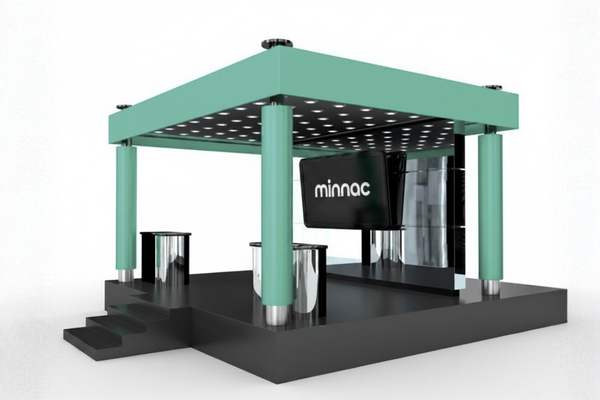
How to improve your conference stand design, messaging and engagement.
Conferences remain one of the most valuable channels for life sciences companies to build visibility, generate leads, and strengthen relationships. But too often, the opportunity is undermined by avoidable mistakes in stand design, messaging, and execution.
Your conference stand is not just a physical space it is a strategic touchpoint. When executed well, it becomes a powerful extension of your brand and a driver of meaningful engagement. When executed poorly, it becomes background noise.
Below are five of the most common mistakes (we see?) and how to address them with a more strategic, audience-first approach.

1. Too much copy / Treating the stand like a brochure
One of the most frequent issues is overloading the stand with text. Dense copy, detailed explanations, and crowded visuals often turn the space into a wall-sized brochure.
In a busy exhibition hall, this simply doesn’t work. Attendees are moving, scanning, and often viewing your stand from a distance, or partially blocked by other people. Overly detailed content becomes unreadable and, more importantly, ignorable.
What to do instead: Keep it clean and visually appealing! Concise, high-impact messaging paired with strong visual design will outperform paragraphs of explanation every time. Detailed conversations can happen once you’ve drawn people in.

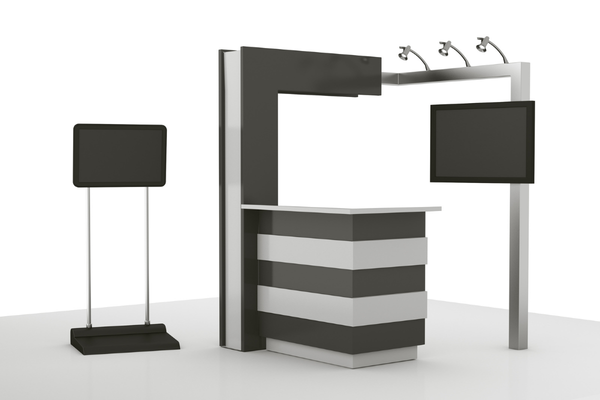
2. Unclear or generic messaging
Even well-designed stands often fall into the trap of vague or generic messaging:
- “High-quality products”
- “Cutting-edge technologies”
- “Innovative platform”
These phrases are overused and, in isolation, meaningless (e.g. as oppose to low-quality products, or a dull and boring platform?!?). They don’t differentiate your company or help your audience understand what you actually offer.
In life sciences where complexity is high, clarity is not optional.
What to do instead:
Be specific and audience relevant. Clearly articulate:
- Your core offering
- The problem you solve
- Who you solve it for
Strong messaging translates complex science into tangible value. This is where many teams struggle internally and where strategic, science-fluent marketing support can make a measurable difference.
3. An uninviting stand experience
Your team’s behaviour on the stand is just as important as the stand itself.
A common sight at conferences:
- Staff sitting down
- People on laptops
- Minimal eye contact
- Closed-off body language
- Internal discussions – unprofessional behaviour?!
This creates an unintentional barrier. Attendees are far less likely to approach if the space feels unwelcoming or disengaged.
What to do instead:
Think of your stand as a live environment rather than a static display.
- Stand up and stay visible
- Make eye contact and acknowledge passersby
- Create an open, approachable atmosphere
This is your “shop window.” The goal is to invite interaction, not wait for it.


4. Nothing to draw people in
Even with clear messaging and a strong team presence, you still need a reason for attendees to stop. Without a hook, your stand risks blending into the background, particularly at large, competitive conferences.
What to do instead:
Introduce an engagement mechanism. This doesn’t need to be gimmicky, but it should create a moment of curiosity or interaction:
- A simple game or challenge
- A relevant giveaway
- A live demo or visual experience
The objective is to create a natural entry point into conversation. From there, your team can build a more meaningful interaction. (Note – gamification as a draw can also be part of your social media content during and post-event.)
5. Poor use of space
Stand layout is often overlooked, particularly in smaller booths. Closed designs, cluttered layouts, or poorly defined areas can limit both visibility and engagement.
In some cases, stands unintentionally signal “private space” rather than “open invitation.”
What to do instead:
Design your space with intention:
- Keep the front open and accessible
- Use zoning where possible (e.g. quick conversations vs. deeper discussions or demos)
- Avoid physical or visual barriers
Even within a small footprint, a thoughtful layout can significantly improve flow and interaction.

Turning your stand into a strategic asset
These mistakes are common, not because teams lack effort, but because conference execution is more complex than it appears. It requires alignment across messaging, design, logistics, and on-the-ground delivery.
For many life sciences companies, internal teams are already stretched. Managing suppliers, coordinating assets, refining messaging, and preparing for on-site execution can quickly become overwhelming and can introduce unnecessary risk.
At Minnac, we support life sciences companies across both marketing strategy and event execution — ensuring that your conference presence is not only well-managed, but purposefully designed to engage the right audience and deliver results.
- Strategic messaging and content that clearly communicates your value
- Booth and experience design guidance grounded in audience behaviour
- End-to-end exhibition support, from logistics to on-site delivery
- Seamless integration with your team, so you stay focused on conversations that matter
The result is a conference presence that is not just “well executed,” but genuinely effective, aligned with your brand, your science, and your commercial goals.
Final thought
A conference stand is a significant investment of time, budget, and opportunity.
Getting the basics right is important. But the real value comes from treating your stand as part of a broader, strategic effort to engage, communicate, and build relationships.
When every element, from messaging to layout to team behaviour, is aligned, your stand stops being just a presence but turns into a platform for impact.
